


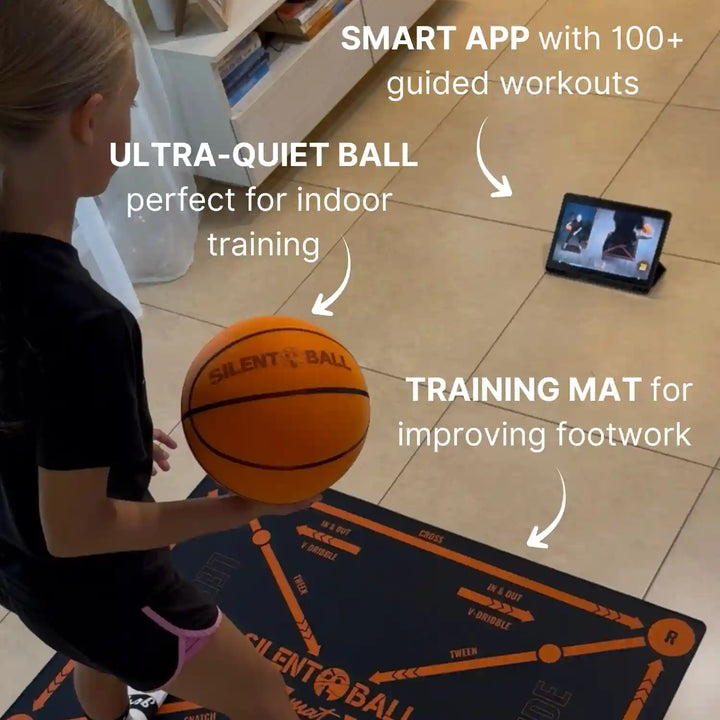
Statistical trends in youth and amateur football show a clear rise in indoor practice sessions. Limited outdoor space, noise restrictions, and time constraints have pushed players to look for quieter, controlled training tools. Among silent soccer ball, the silent soccer ball has emerged as a practical solution backed by usage data rather than hype. Training reports indicate that players who practice more frequently, even in short indoor sessions, demonstrate measurable improvements in ball control and reaction speed.
What Makes a Silent Soccer Ball Different from a Standard Ball?
From a performance statistics perspective, the silent soccer ball is engineered with reduced rebound and sound absorption materials. This design leads to lower decibel output during impact, making it suitable for indoor environments. Data comparisons between standard balls and silent versions show up to a 70–80% reduction in impact noise. More importantly, bounce metrics are optimized to remain predictable, allowing players to repeat drills without uncontrolled ball movement.
How Does Controlled Practice Improve Technical Metrics?
Controlled practice environments are strongly linked to skill acquisition. Training analysis shows that players focusing on short-range touches indoors can increase successful first-touch rates by over 25% within weeks. The silent soccer ball supports this by limiting distractions and erratic rebounds. With fewer interruptions, players complete more repetitions per session, which directly correlates with improved dribbling accuracy and foot-eye coordination.
Is Noise Reduction Really a Performance Factor?
Surprisingly, yes. Sports psychology data suggests that reduced auditory disturbance helps players maintain concentration for longer periods. Indoor training with quieter equipment results in longer average session durations. Silent soccer ball usage statistics reveal that players train up to 40% longer indoors compared to traditional equipment, primarily due to the absence of noise-related fatigue or household restrictions.
What Do Usage Patterns Say About Skill Development?
Practice frequency is one of the strongest predictors of skill growth. According to training logs analyzed across amateur players, those using indoor-friendly tools practice more consistently throughout the week. The silent soccer ball allows daily micro-sessions, which data shows are more effective than fewer, longer outdoor sessions. Touch-count statistics increase significantly, and error rates during close-control drills decrease over time.
How Does It Support Different Age Groups?
From a data segmentation standpoint, silent soccer balls show strong adoption among younger players and adults alike. Youth training metrics highlight improved confidence, as players can practice freely without worrying about noise. For adults, especially those balancing work schedules, indoor practice statistics reveal higher retention of technical skills when short sessions are maintained regularly.
Can Indoor Metrics Translate to Outdoor Performance?
One common question is whether indoor training truly impacts match performance. Performance tracking data suggests a positive transfer. Players who consistently train with controlled indoor tools show faster decision-making and cleaner touches in competitive settings. While power metrics may still require outdoor practice, technical accuracy statistics improve noticeably through silent ball training.
What Does the Data Suggest for Long-Term Training Plans?
Longitudinal training analysis indicates that combining silent indoor practice with regular outdoor sessions produces balanced skill growth. Coaches tracking player progress note steady improvements in control-related KPIs such as pass accuracy and ball retention. The silent soccer ball fits well into data-driven training plans focused on consistency, safety, and measurable improvement.
Final Statistical Insight on Silent Soccer Ball Training?
When viewed through a statistical lens, the silent soccer ball is not a novelty but a response to measurable training needs. Reduced noise, controlled rebound, and higher practice frequency all contribute to improved technical metrics. For players seeking efficient, indoor-friendly skill development, the data supports its role as a valuable training asset rather than a temporary trend.